- Telehealth available in California, Florida, and Oregon, Arizona
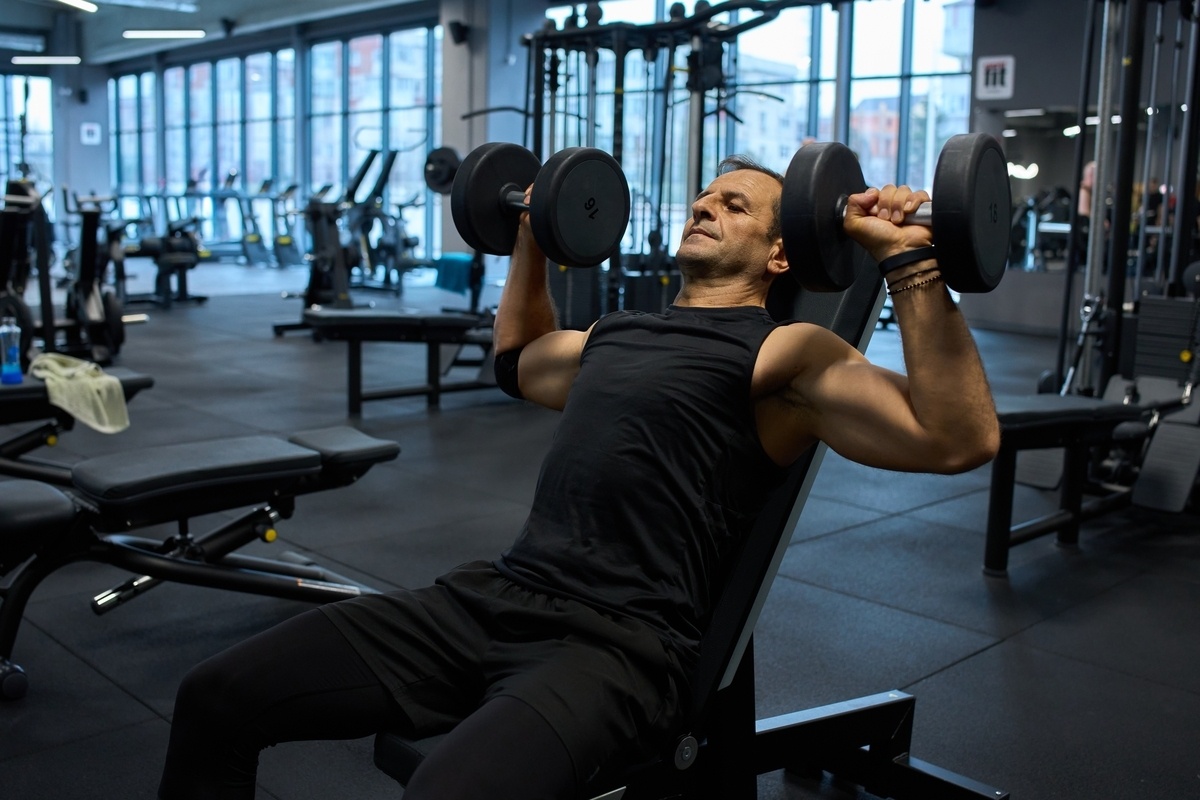
How does low testosterone affect muscle mass and strength in men? Many men first notice the answer in the gym or on the stairs, not on a lab report. Low testosterone and muscle mass are closely connected, because the hormone helps the body build and keep muscle tissue.
Muscle loss is also common with age, so it is easy to brush off. This guide explains how the link works, what research shows, and what else can drain strength. You can then decide when to ask a provider about a hormone check.
Muscle does not vanish overnight. It fades slowly, often over years, so the change is easy to miss. Many men decide they are just getting older and lower their expectations.
According to Harvard Health, adults can lose as much as 3% to 5% of their muscle per decade after age 30. Over a lifetime, most men lose about 30% of their muscle. This slow loss is called sarcopenia, the medical term for age-related muscle loss.
Aging explains part of the story, but hormones can speed it up. That is why a hormone check can be worth considering when strength drops faster than expected.
It also helps to know that muscle loss is not the same as weight loss. A man can hold the same weight while losing muscle and gaining fat. So how your clothes fit and how your lifts feel are often better clues than body weight.
Testosterone is the main male sex hormone, and it does far more than affect sex drive. According to Cleveland Clinic, one of its jobs in men is to help build muscle mass. That job is the basis for the link between low testosterone and muscle mass.
Harvard Health describes testosterone as a hormone that stimulates protein synthesis and muscle growth. Protein synthesis is the process your body uses to repair and build muscle fibers. When testosterone falls, that process can slow down.
Testosterone also plays a part in body fat. Cleveland Clinic lists increased body fat among the signs of low testosterone, along with less muscle strength and mass.
The result can be a slow shift in body composition. That means the mix of muscle and fat in your body changes. Muscle shrinks, fat grows, and effort in the gym stops paying off.
Muscle matters beyond appearance. It powers everyday movement, from lifting a child to getting out of a chair. Strong muscles also help with balance, which matters more with age.
The two tend to change together in a few predictable ways. Cleveland Clinic lists lower muscle strength, lower muscle mass, and less endurance among the symptoms of low testosterone.
Men often describe this in practical terms. A normal workout feels harder, familiar weights feel heavy, and soreness lasts longer. Our page on loss of muscle mass explains how these changes connect to hormones, food, and inflammation.
In muscle, low testosterone often shows up in three ways:
These changes do not prove a hormone problem. Many other things cause them, so testing matters.
Muscle changes rarely come alone. Look for patterns across daily life, not just the gym. The signs below are common reasons men start asking questions.
One sign alone means little. A group of these signs often raises the question of low testosterone and muscle mass. This is more likely with low energy or low mood. It helps to note when the changes began, because timing is useful in an evaluation.
Simple numbers help too. Track the weight you lift for a given exercise, or how many stairs you climb before tiring.
Studies in older men give a clearer picture of what testosterone can do for muscle. According to a three-year trial in the Journal of Clinical Endocrinology and Metabolism, researchers followed healthy men aged 60 and older. Their total testosterone was between 100 and 400 nanograms per deciliter (ng/dL), or their free testosterone was below 50 picograms per milliliter (pg/mL).
Total testosterone is all of the hormone in your blood. Free testosterone is the part not attached to proteins, so the body can use it right away.
Men used either a daily 1% testosterone gel or a placebo gel for three years. A placebo is an inactive gel used for comparison. Strength and muscle were measured at the start and several times afterward.
Compared with placebo, the men using testosterone had:
Stair-climbing power measures how fast a person can move up a set of stairs. It is a useful test because it reflects a real daily task. Leg-press and chest-press tests measure the force muscles can produce.
The authors called these benefits modest. They also noted that how much the changes matter for daily life and disability still needs study. The trial supports a link between low testosterone and muscle mass. It does not show that testosterone alone solves muscle loss.
Hormones are only one piece. Several other factors cause muscle loss, and they often overlap.
Long-term illness and some medicines can also reduce muscle. A provider can review these factors before pointing to any single cause.
Because these causes overlap, a careful look at the whole picture matters. Sorting out low testosterone and muscle mass from other causes keeps treatment aimed at the right problem.
Symptoms alone cannot confirm low testosterone. A provider usually starts with your history and blood tests, often drawn in the morning. Results are read together with how you feel, because the normal range differs between labs.
If tests and symptoms point to a true deficiency, a provider may discuss testosterone replacement therapy (TRT) as one option. Providers also group it under hormone replacement therapy. It is usually considered alongside training, food choices, and sleep.
Harvard Health notes that the U.S. Food and Drug Administration (FDA) has not approved testosterone for building muscle. That is why treatment aims to correct a confirmed deficiency, not to chase bigger muscles. Decisions depend on your health history, your goals, and your lab results.
A few notes can make an appointment more useful:
Daily habits matter whether hormones are low or not. They also shape how low testosterone and muscle mass respond to any treatment. These habits support muscle at any age:
Men who start hormone treatment often ask how long changes take. Our post on what changes in the first three months of TRT lays out a typical timeline. It also notes that steady training speeds results.
Testosterone helps the body build and keep muscle. When levels are low, strength and muscle size can fall. Age, activity, and nutrition also play a role.
Some loss is normal. Harvard Health says adults can lose up to 3% to 5% of muscle per decade after 30. Strength training can slow the loss.
In the three-year trial, men using testosterone gained modest strength and lean mass compared with placebo. Training and protein still matter. Treatment works best as part of a full plan.
Providers use blood tests that measure total testosterone and sometimes free testosterone. These are often drawn in the morning. Results are read together with your symptoms.
See one if strength falls faster than expected. Also go if it comes with low energy, low mood, or belly fat. Sudden weakness or pain needs prompt medical care.
If you live near Mission Viejo, you can learn more about TRT in Mission Viejo. A consultation lets you talk through muscle changes, hormone testing, and treatment options at your own pace.
Low testosterone and muscle mass are connected, but they are not the whole story. A clear picture of your hormones, habits, and health history is the best place to start.
Losing strength is not a personal failing, and it is not always just aging. Looking at your hormones, habits, and health history together is the first step toward knowing what is behind it.
This article is for educational purposes only and is not medical advice. Testosterone therapy is not appropriate for everyone. Always consult a qualified healthcare provider before starting or changing any treatment, exercise plan, or diet.
Harvard Health Publishing. Preserve your muscle mass. https://www.health.harvard.edu/staying-healthy/preserve-your-muscle-mass
Cleveland Clinic. Low Testosterone (Male Hypogonadism). https://my.clevelandclinic.org/health/diseases/15603-low-testosterone-male-hypogonadism
Storer TW, Basaria S, Traustadottir T, et al. Effects of testosterone supplementation for 3 years on muscle performance and physical function in older men. Journal of Clinical Endocrinology and Metabolism. 2017;102(2):583-593. https://experts.nau.edu/en/publications/effects-of-testosterone-supplementation-for-3-years-on-muscle-per/