- Telehealth available in California, Florida, and Oregon, Arizona
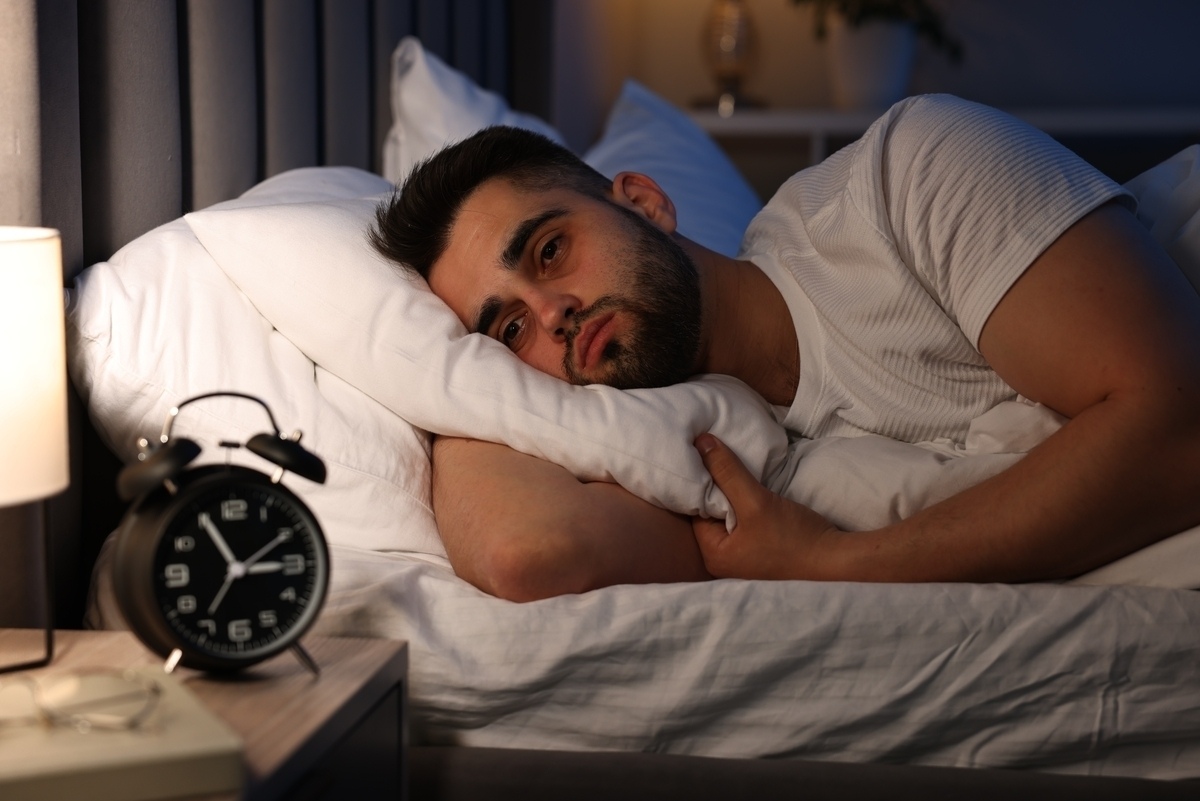
Does low testosterone affect how well you sleep? If you wake up frequently, struggle to fall asleep, or feel exhausted after a full night in bed, your hormones may be playing a bigger role than you realize.
For many men, the link between low testosterone and sleep disruption never comes up in a standard doctor visit. Sleep problems are often blamed on stress, poor habits, or aging. But the clinical research tells a more complete story. Low testosterone and sleep quality are closely linked, and the connection runs in both directions.
This guide explains how testosterone affects sleep, why disrupted sleep suppresses testosterone further, and what evaluation looks like.
Poor sleep is one of the most common complaints among men in their 30s, 40s, and 50s. Most assume the cause is external. Stress, screen time, or simply getting older are the usual explanations.
Those factors are real. But they are not always the full picture. Testosterone directly regulates several biological systems involved in sleep quality. When levels fall below a healthy threshold, the effects on sleep architecture can be significant.
For men experiencing persistent fatigue, difficulty staying asleep, or waking unrefreshed, the Low Energy and Fatigue conditions page covers how hormonal imbalances contribute to chronic energy disruption.
The connection between low testosterone and sleep is not a fringe theory. It is supported by large-scale clinical studies. It is increasingly recognized as a meaningful contributor to sleep disruption in middle-aged men.
The clinical evidence linking low testosterone and sleep quality has grown substantially over two decades. The findings are consistent across multiple study designs and population groups.
According to research published by the National Institutes of Health, low testosterone concentrations are significantly associated with disrupted sleep, sleep fragmentation, and decreased sleep duration. Testosterone levels are positively associated with sleep efficiency. Men with higher testosterone tend to achieve more restorative, consolidated sleep.
A large cohort study of 1,312 men confirmed this further. According to additional research published by the NIH, men with lower testosterone showed lower sleep efficiency, more nocturnal awakenings, and less time in slow-wave deep sleep compared to men with normal levels.
Key clinical findings include:
Understanding why low testosterone and sleep are connected requires a brief look at when testosterone is actually produced.
Most testosterone is produced and replenished at night. Secretion follows a circadian rhythm. Levels rise during sleep, peak in the early morning, and decline throughout the day. This nocturnal production is tied directly to slow-wave sleep and REM sleep.
When sleep is disrupted, testosterone production is impaired. Research shows that just one week of fewer than five hours of sleep per night reduces daytime testosterone by 10 to 15 percent in healthy young men. That is equivalent to aging ten to fifteen years in hormonal terms.
The practical implications are clear. Men who consistently sleep fewer than seven hours produce meaningfully less testosterone than those sleeping seven to nine hours. This is not a minor difference. Studies show the hormonal gap between adequate and insufficient sleep is comparable to the testosterone decline seen across a decade of aging.
Sleep fragmentation also matters. Sleep can be disrupted even when total hours appear sufficient. Waking frequently throughout the night interrupts the deep sleep stages where most testosterone secretion occurs. This is why men who spend eight hours in bed but wake multiple times often still feel hormonally depleted.
Shift workers and men with irregular sleep schedules face elevated risk. Circadian rhythm disruption directly suppresses nocturnal testosterone secretion regardless of total sleep duration. For these men, improving sleep consistency is as important as improving sleep duration.
Addressing sleep quality is a standard part of any comprehensive testosterone optimization plan.
One of the most important aspects of low testosterone and sleep is that the relationship runs in both directions. This bidirectional cycle explains why many men find themselves in a pattern of worsening sleep and declining hormonal health.
Low testosterone disrupts sleep. When testosterone falls below optimal levels, the hormonal environment needed for restorative sleep is compromised. Men with low testosterone report difficulty falling asleep, lighter sleep, more frequent awakenings, and waking unrefreshed.
Poor sleep suppresses testosterone. When sleep quality declines, nocturnal testosterone production is disrupted. Cortisol rises with sleep deprivation and directly suppresses testosterone at the cellular level.
The longer sleep remains poor, the more sustained the hormonal suppression becomes. This is what makes the cycle so difficult to break without addressing both factors together.
The cycle compounds in four clear steps:
Breaking this cycle requires identifying the entry point and addressing both factors as part of a coordinated clinical approach.
Low testosterone and sleep problems do not present the same way in every man. The type of disruption depends on deficiency severity, other hormonal imbalances, and individual factors like age and metabolic health.
Common sleep disruptions associated with low testosterone include:
Sleep apnea deserves specific attention in any discussion of low testosterone and sleep. The two conditions are significantly interrelated and frequently overlooked together in clinical settings.
Obstructive sleep apnea occurs when the airway collapses during sleep. It causes intermittent pauses in breathing and drops in blood oxygen. It affects roughly nine percent of adult males and is more common in men with obesity and metabolic dysfunction.
The connection between sleep apnea and testosterone runs in both directions. Low testosterone contributes to increased visceral fat and reduced upper airway muscle tone. Both make sleep apnea more likely. Sleep apnea then suppresses testosterone by fragmenting sleep architecture and preventing adequate time in the deep stages where testosterone is produced.
According to the Sleep Foundation, sleep fragmentation from apnea events disrupts the nocturnal testosterone rhythm. Men with untreated sleep apnea frequently present with testosterone levels below the normal range as a direct result of their sleep disorder.
Men who snore loudly, gasp during sleep, wake with headaches, or feel excessively sleepy during the day should ask about sleep apnea evaluation as part of their hormonal workup. Treating sleep apnea through CPAP therapy, positional interventions, or weight management can independently improve testosterone in some men.
For men who suspect low testosterone and sleep may be connected, a comprehensive evaluation goes beyond a single testosterone test.
A thorough clinical assessment typically includes:
For men also experiencing mood changes alongside sleep disruption, the Can Low Testosterone Cause Depression in Men blog covers the hormonal connection to mood in detail. Low testosterone, sleep problems, and depression frequently present together.
For men whose sleep disruption is driven by hormonal deficiency, restoring testosterone to a healthy range can improve sleep quality. Most men report deeper sleep, fewer nocturnal awakenings, and feeling more rested upon waking. Results are most consistent when TRT is combined with sleep hygiene and management of any underlying conditions like sleep apnea.
Most clinical research points to seven to nine hours of quality sleep per night. Consistently sleeping fewer than six hours is associated with significantly reduced daytime testosterone levels. Sleep quality matters as much as quantity, and fragmented sleep can suppress testosterone even when total hours appear adequate.
Yes. The relationship is bidirectional, and poor sleep can cause low testosterone just as low testosterone can cause poor sleep. Both the hormonal and sleep dimensions need to be evaluated together rather than in isolation.
Yes, particularly if you snore, wake with headaches, or feel excessively tired during the day. Sleep apnea and low testosterone frequently coexist and reinforce each other. Treating sleep apnea can independently improve testosterone in some men, and TRT is more effective when sleep quality is also optimized.
TRT can improve sleep quality in men whose disruption is driven by testosterone deficiency. It specifically improves slow-wave deep sleep, reduces nocturnal awakenings, and addresses night sweats from vasomotor instability. Men with sleep apnea or high cortisol will achieve the best outcomes when all relevant factors are addressed together.
Most men notice improvements in sleep quality within four to eight weeks of treatment. Deeper, more consistent improvements in sleep architecture typically become apparent by the three-month mark. Results vary based on baseline testosterone levels, delivery method, and whether other contributing factors are also being managed.
The relationship between low testosterone and sleep is one of the most practically important connections in men’s hormonal health. Many men attribute years of poor sleep to lifestyle, stress, or aging. They never consider that hormone levels may be a significant contributing factor.
Knowing this connection is bidirectional, measurable, and treatable opens a clearer path forward for men who have not resolved their sleep difficulties through conventional means.
For men in Southern California who want to understand how testosterone and sleep are evaluated as part of a comprehensive hormone workup, TRT for Men in Laguna Hills, CA outlines the evaluation process and what medically guided testosterone care involves in a functional medicine setting.
For men who want to explore the full picture of hormone health, the Hormone Replacement Therapy service page covers the evaluation process, treatment approach, and ongoing monitoring in detail.
Poor sleep in men is rarely caused by a single factor. Understanding where the hormonal dimension fits into your own picture, and whether low testosterone and sleep disruption may be reinforcing each other, is one of the most useful steps toward finding a lasting solution.
The information provided in this article is intended for educational purposes only and does not constitute medical advice. Sleep disorders and testosterone deficiency are medical conditions requiring evaluation and treatment by a licensed healthcare provider. Testosterone replacement therapy requires evaluation, diagnosis, and clinical supervision. Do not start, stop, or adjust any medication or hormone therapy without consulting your provider directly.